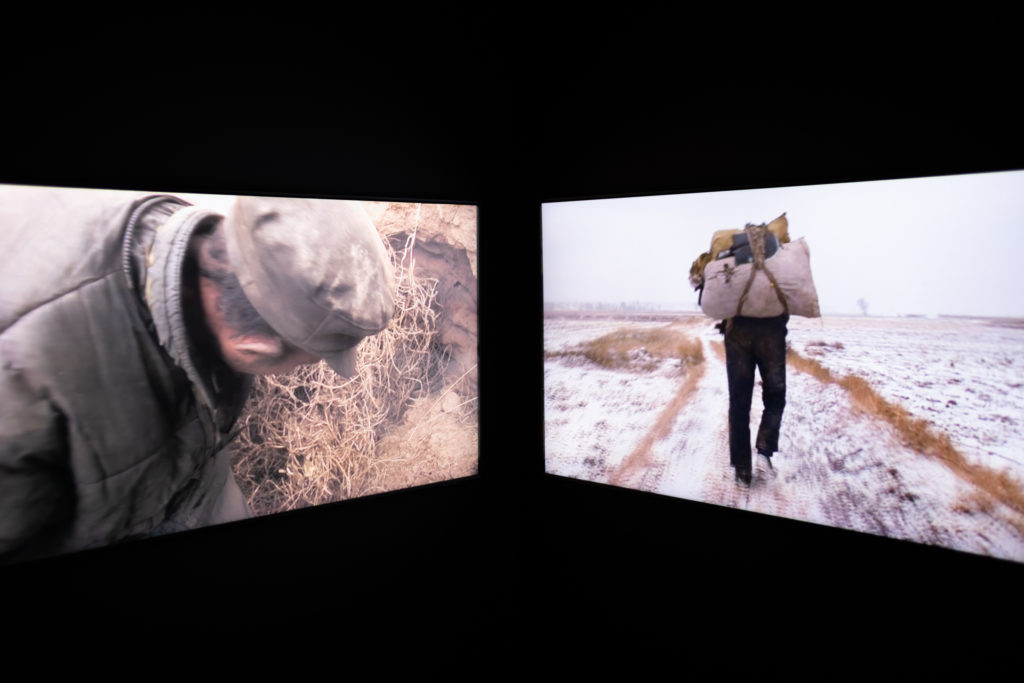
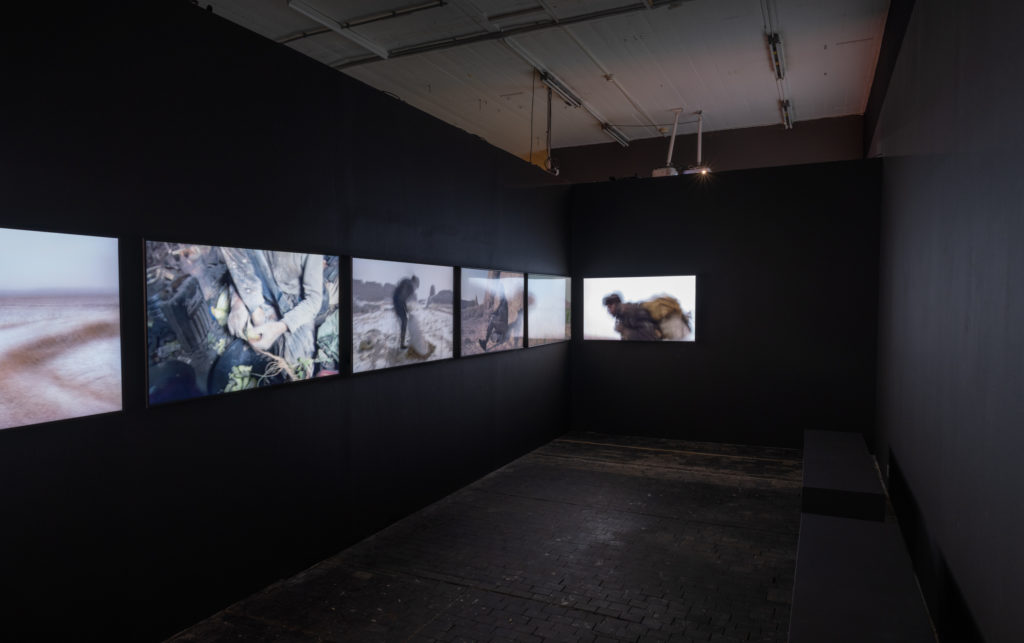
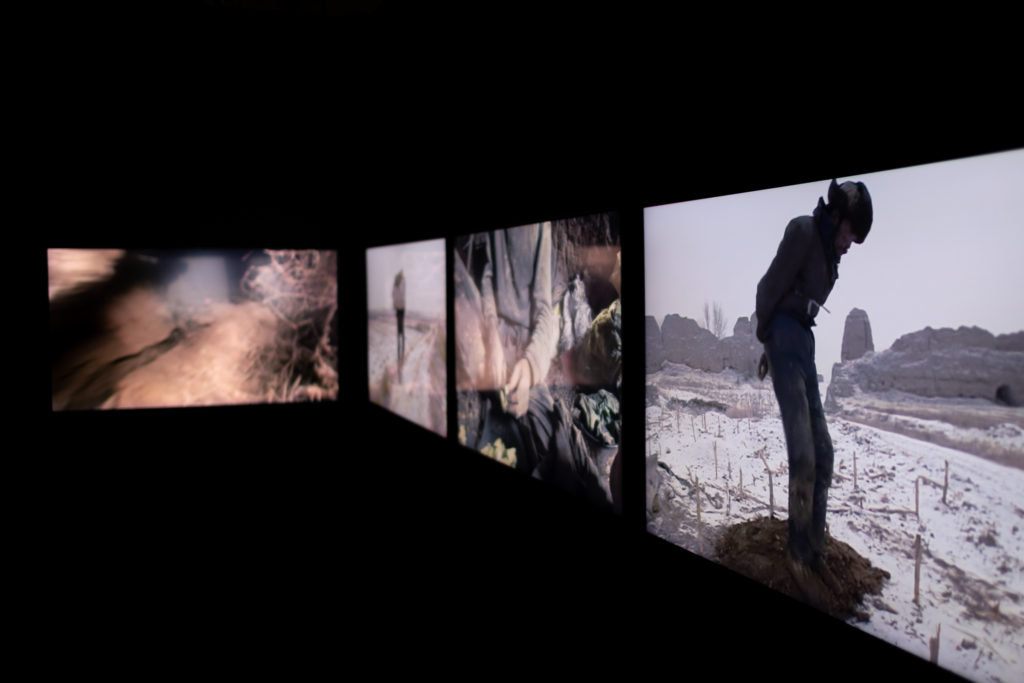
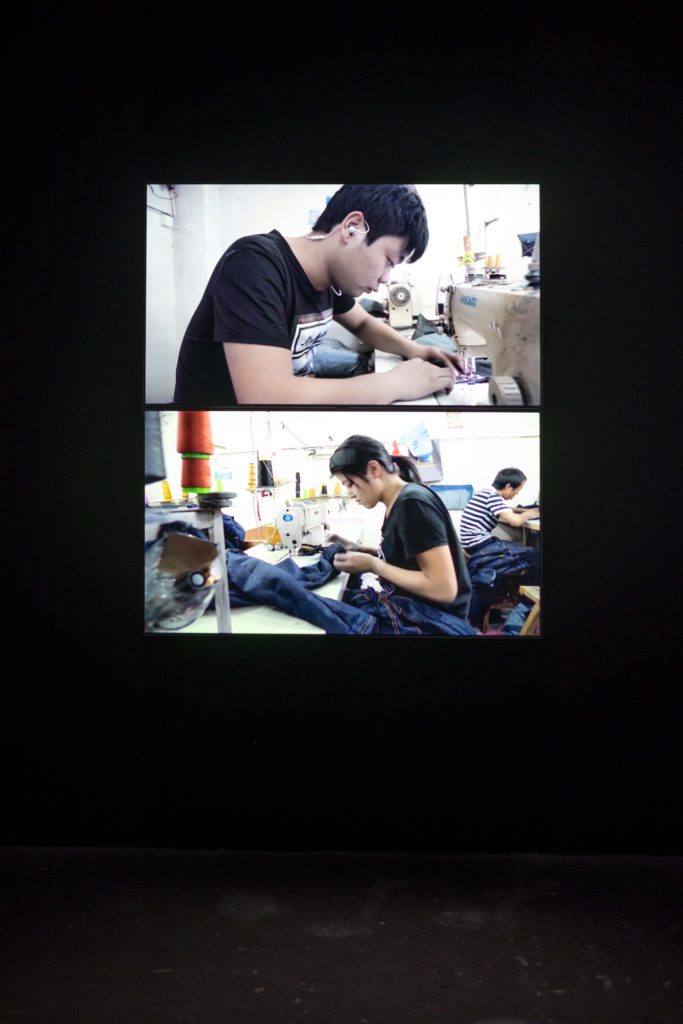
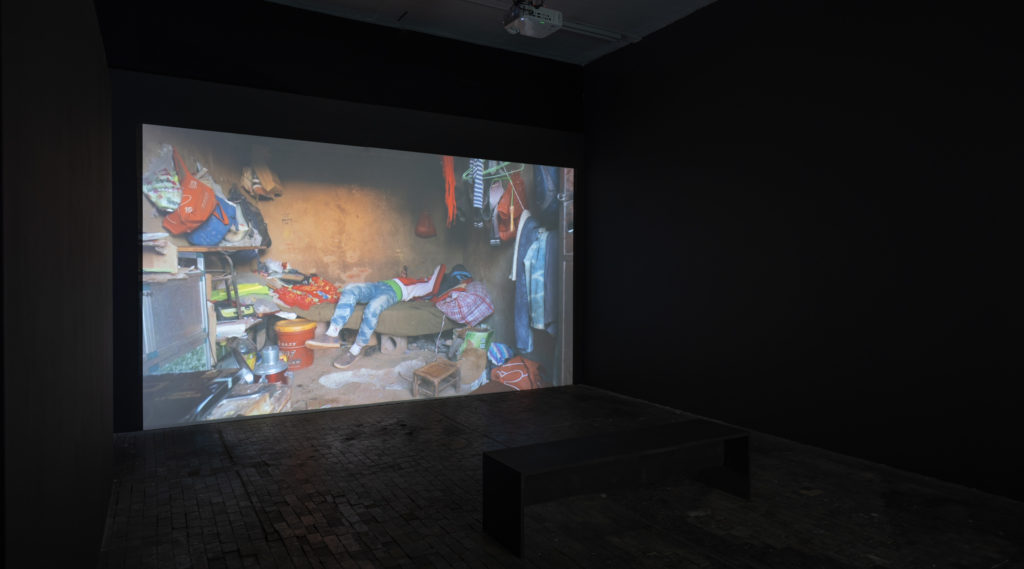
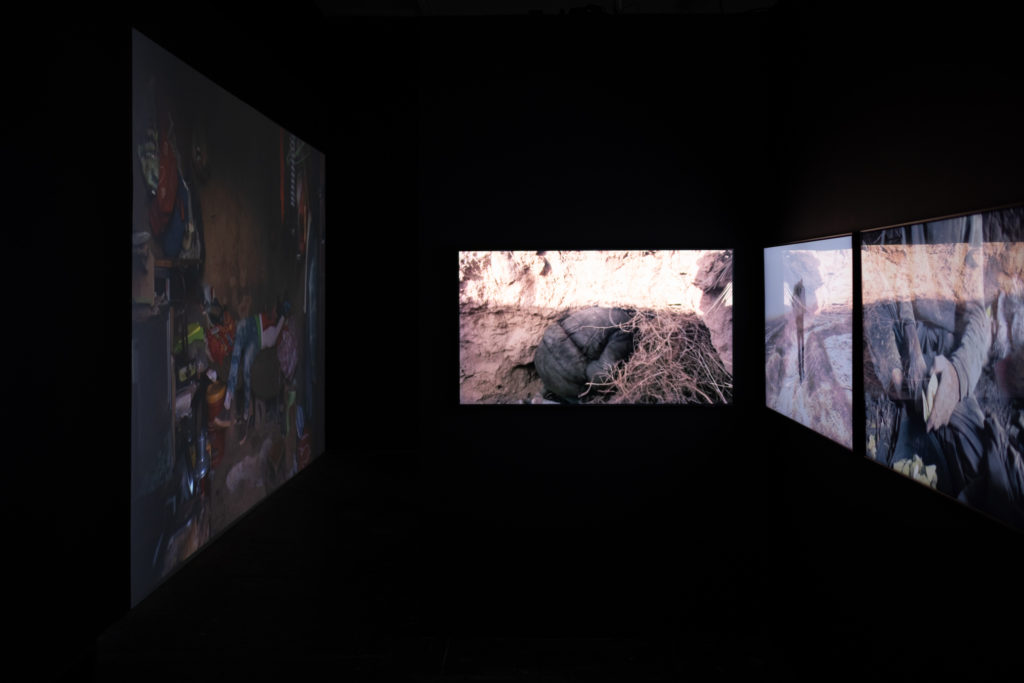
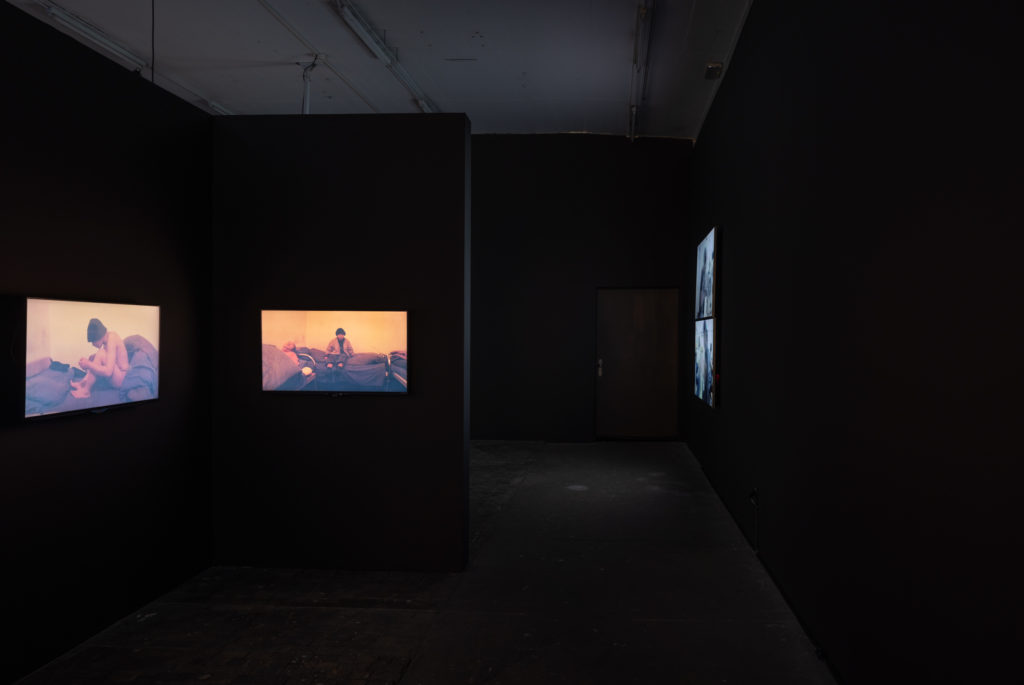
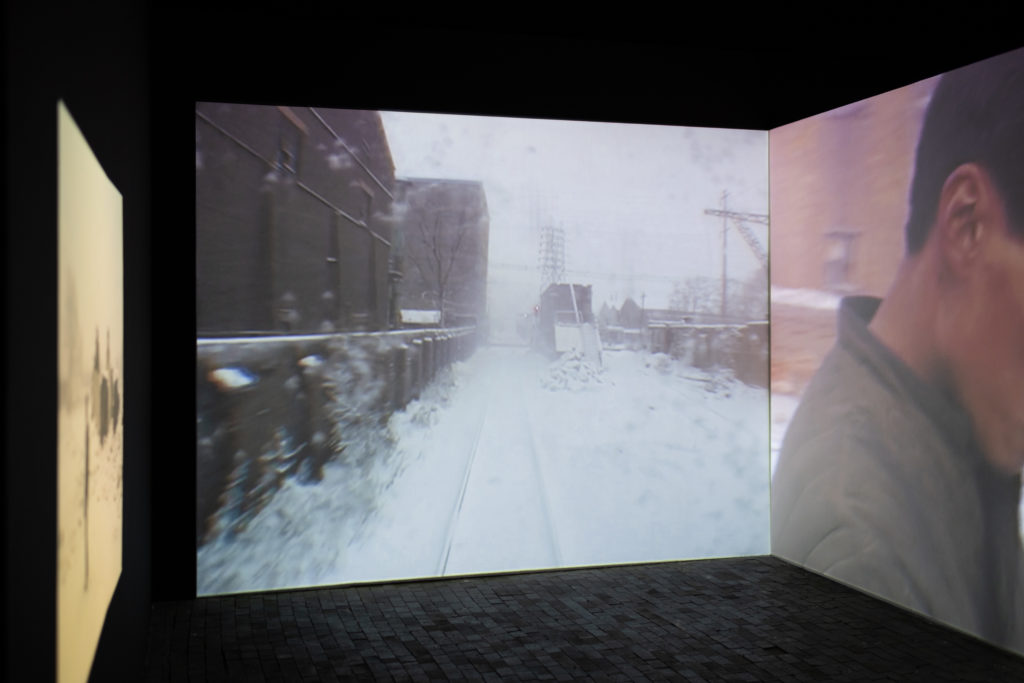
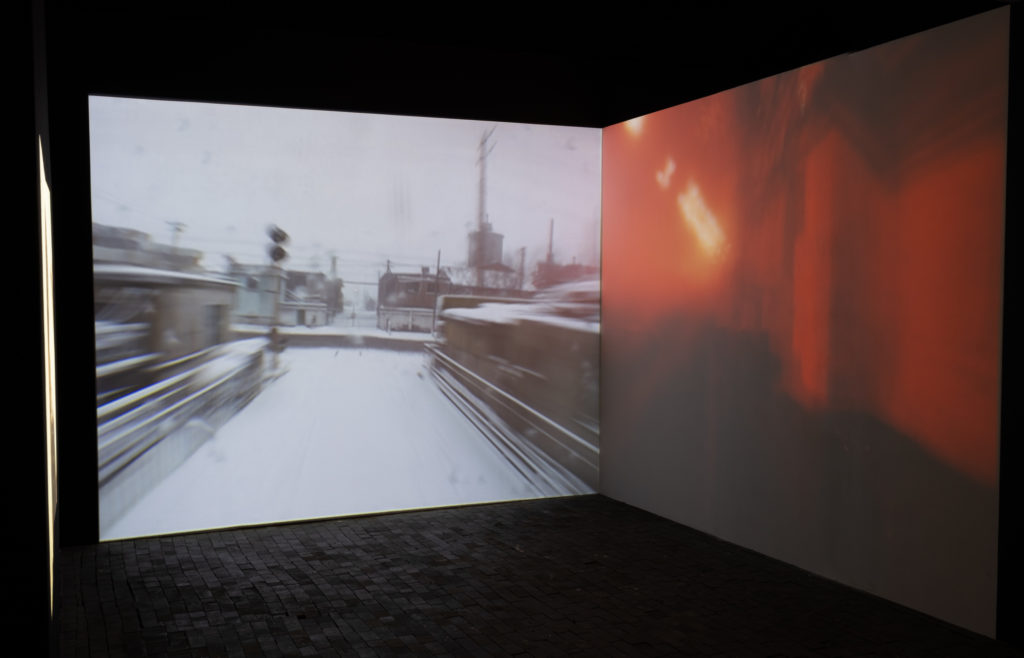
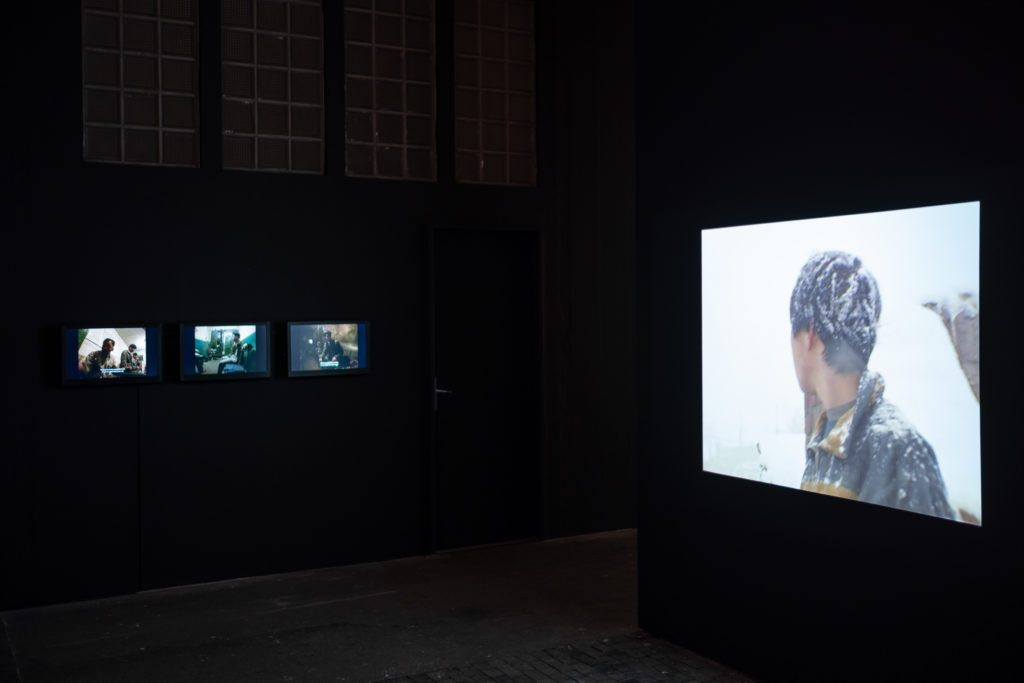
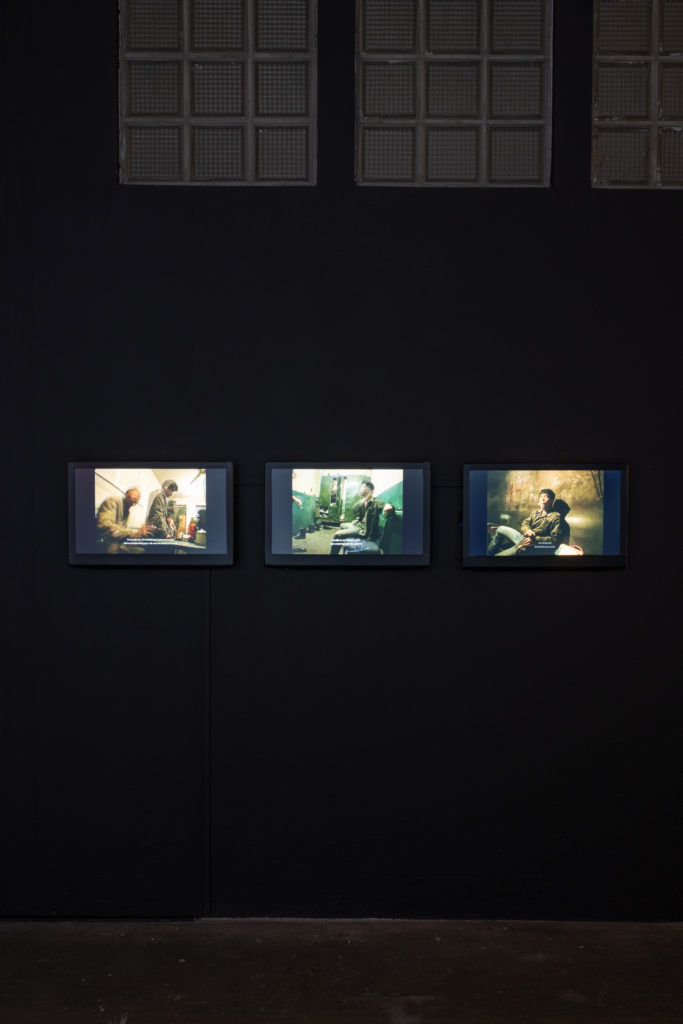
The oeuvre of contemporary Chinese filmmaker Wang Bing consists of monumental films, extraordinary in their duration to which the viewer seems subjected. They reveal an aesthetic ambition of going beyond the purely documentary purpose of images. Indeed, they unveil formal figures and stylistic approaches that make Wang Bing a complex contemporary visual artist. Conceived as a ‘general installation’ and based on a selection of sequences from Wang Bing’s films, the exhibition allows visitors to apprehend in an immersive manner the documentary and plastic writing of Wang Bing’s cinematographic work. The exhibition invites visitors on a journey through Wang Bing’s cinema, as he himself has journeyed through China. It is a country tormented by the major questions that it must tackle in the 21st century: the human under threat, the dissolution of large industrial complexes from the previous century, confinement, forced migration and surveillance, the submission of the human body to the demands of the job market. This physical experience allows entries into the apprehensions of the people to whom the filmmaker is so stubbornly attached, to characters who cross territories undergoing profound industrial and natural changes, to those on the run or cloistered, resistant in their survival or in their search of unknown horizons.
The exhibition Wang Bing. The Walking Eye is curated by Dominique Païni, critic and curator, and Diane Dufour, co-director of LE BAL, a venue dedicated to contemporary documentary images in Paris, where the exhibition was shown from May to November 2021. Its presentation in Switzerland is a collaboration between the Black Movie International Independent Film Festival and the Centre de la photographie Genève.
“One day, in 1999, in northeastern China, a thirty-two-year-old man who had studied photography at an art school, picked up a little amateur video camera and filmed, by himself, for almost two years, the disappearance of China’s largest metallurgical complex. The result was West of the Tracks (2003), a masterly nine-hours-long film, experienced by many as marking the emergence of a film-maker and of a unique way of embodying cinema. A new perspective will emerge from the aesthetic ambition of this first work. Wang Bing simultaneously fixes changes in History and the minutiae of matter. He also shows chaos engendered by China’s political, social, and civilisational changes. Likewise, the immensity of the territory imposes a dominant approach in the filming: the endless traveling shot. The political significance of Wang Bing’s cinema will be expressed through an ethics of patience, concentration, persistence. The act of filming allows meaning to come to life as he shoots. This presence in the spatial and human reality makes up the basis of his ideological independence. Scattering his observation posts, from north to south, east to west, Wang Bing shapes an entire people, a people in cinema. His works present multiple, overlaid stories that multiply, generating a narrative excess and three figures dominate his writing and highlight the course of this exhibition: ruin, confinement and surveillance.
It is impossible to give a succinct summary of Wang Bing’s presence in each shot, the fluid orchestration of life in front of each one of his footsteps, his intuition in the choreography of bodies and trajectories in space, the perfect adjustment of his frame and the randomness of surveillance. Neither is it possible to reproduce the spectator’s experience of immersion in the elongated time of the story. Thus, it is through fragments cut from the living matter of six films, that we have chosen to approach his great oeuvre. For us, they stand as the most emblematic of Wang Bing’s unique way of ‘being in the world’. Wang Bing meets individuals, devotes himself to their wanderings, reveals what has been lost in them and continues despite everything. Like so many insignificant trajectories erected as monuments to existence: ‘I didn’t want to imitate life. The image in itself is already something concrete. I wanted to find a way to abstractly express a feeling, life itself’.”
– Dominique Païni and Dianne Dufour, curators