Throughout the year, the Centre de la photographie Geneva Photography Centre offers cultural outreach programmes for schools from 5P (aged 8) up to university level.
Participatory exhibition tours for schoolchildren last between 35 and 55 minutes, and some can be accompanied by an image interpretation workshop. Interactive and engaging, the tours are led by a professional facilitator and photographer, who designs each tour according to the themes explored in the exhibition. Each tour is interdisciplinary and covers art and photography, as well as themes related to specific exhibitions such as ecology, history, geography. Teachers of all disciplines are therefore welcome. Descriptions of the tours currently on offer can be found below. Visits are free for school classes. Self-guided tours are also possible for school classes.
Visits are possible at Espace Ami-Lullin from Monday to Friday from 8.00 to 18.00, depending on the availability of the facilitators. Visits are possible at Maison de l’enfance et de l’adolescence on Mondays, Tuesdays, or Thursdays from 8.00 to 17.30, depending on the availability of the facilitators. Registrations are made exclusively via the online form for each exhibition.
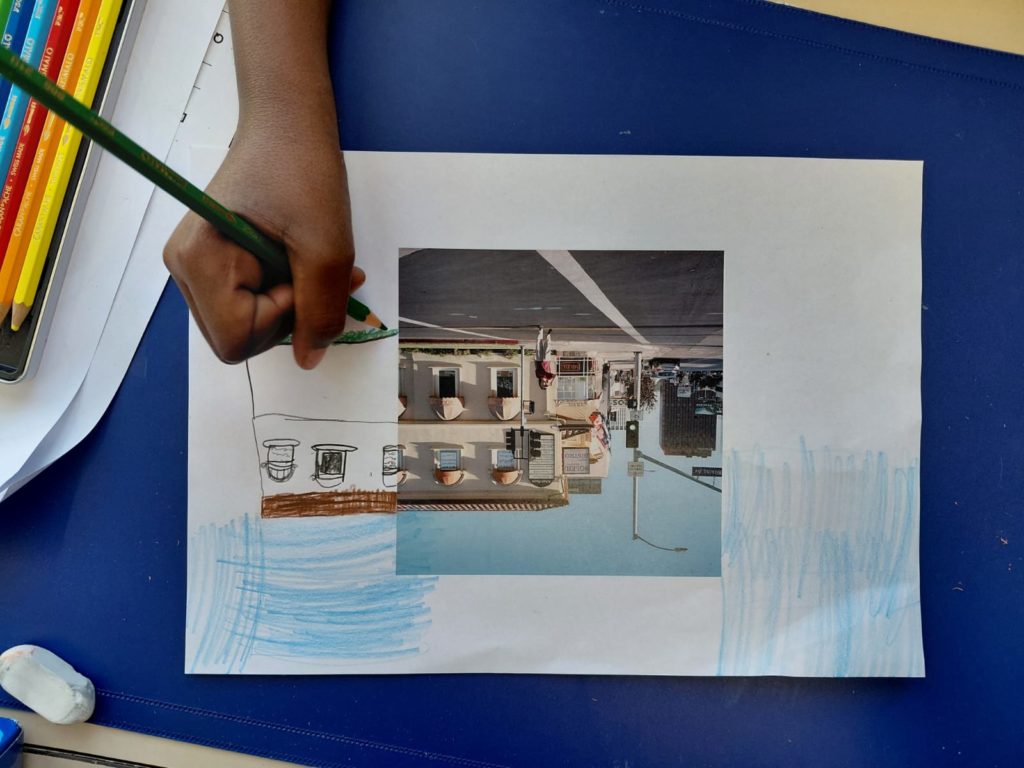
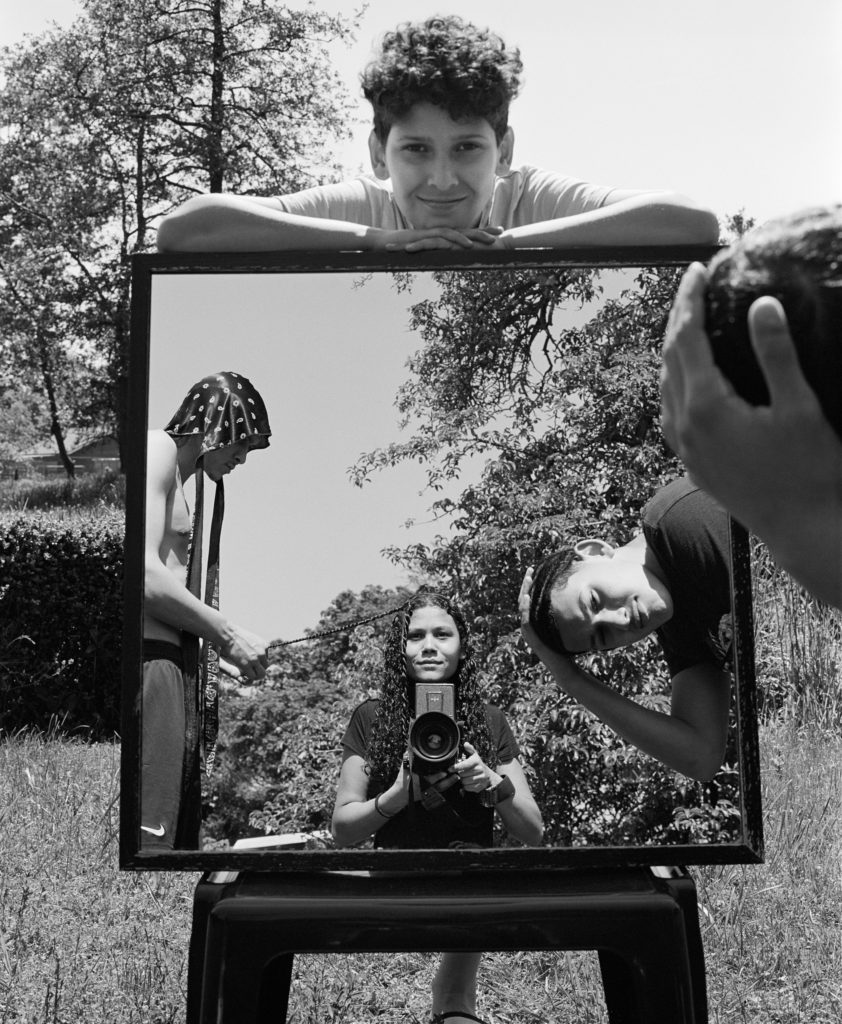
Since October 2025, the Centre de la photographie Genève has also been offering workshops in schools in the canton of Geneva, which aim at promoting a better understanding of the role of images in today’s society. The programme for ESI and ESII levels focuses on self-representation through photography in the age of social media, or on how photographs are shared online and personal data. The programme for primary levels (AC, SP, 4-8P) focuses on image interpretation and out-of-frame elements, or on self-representation through photography in the age of social media.
Information on workshops for ESI and ESII levels can be found on thr website of Ecole&Culture website. Information and registration for primary levels can be found on the Ecole&Culture website (link to the complete catalogue of activities).