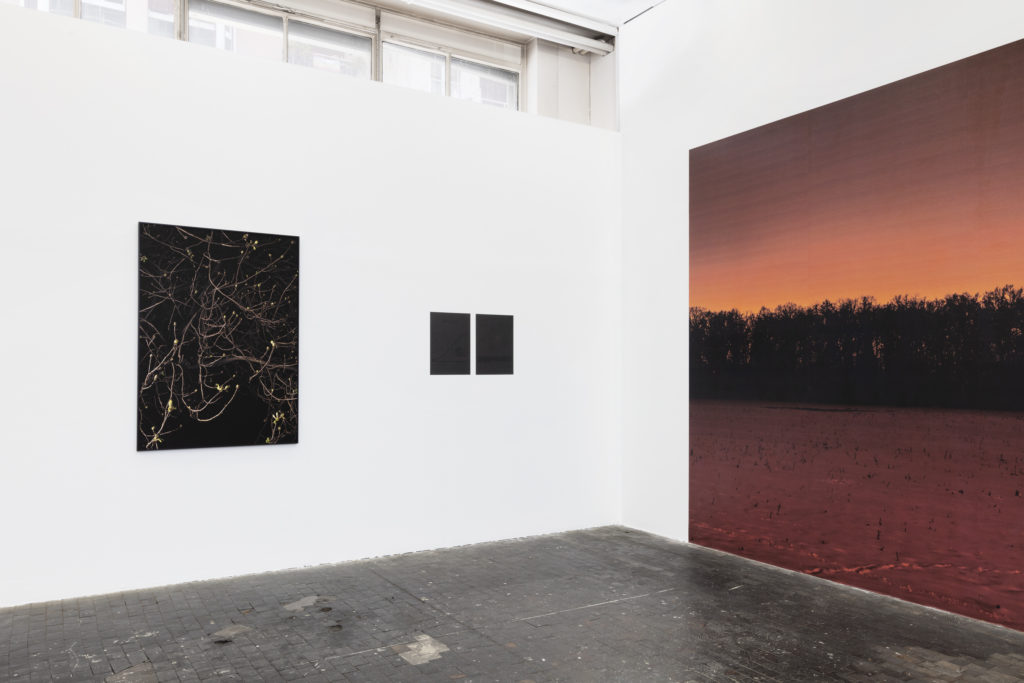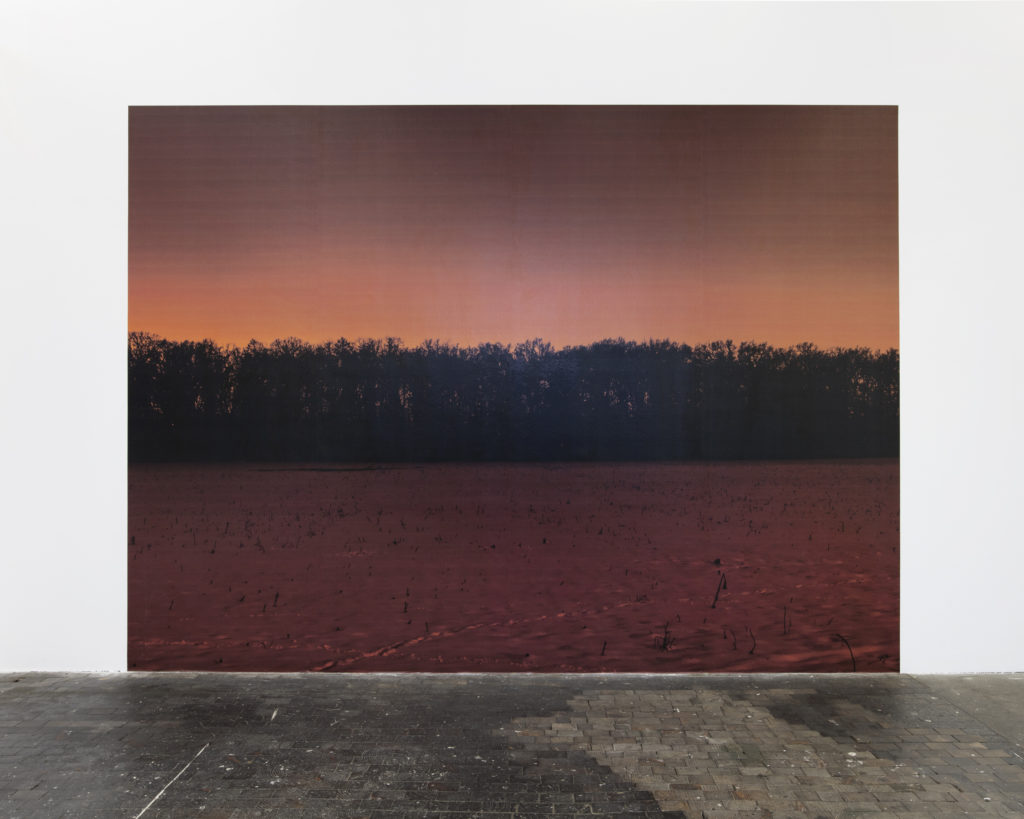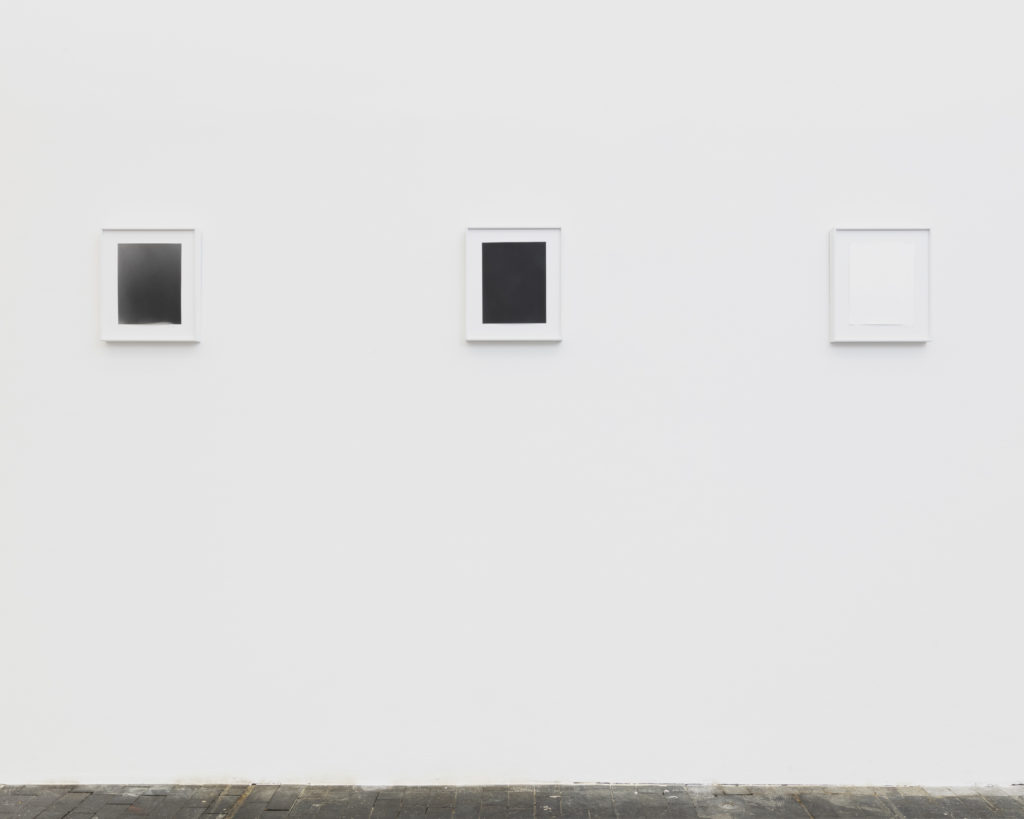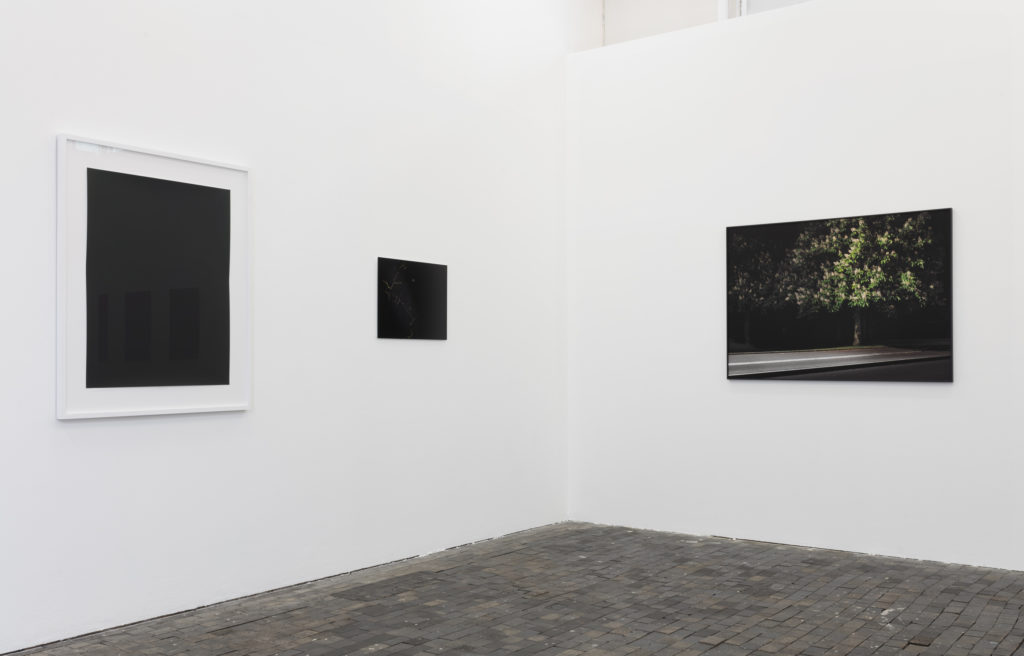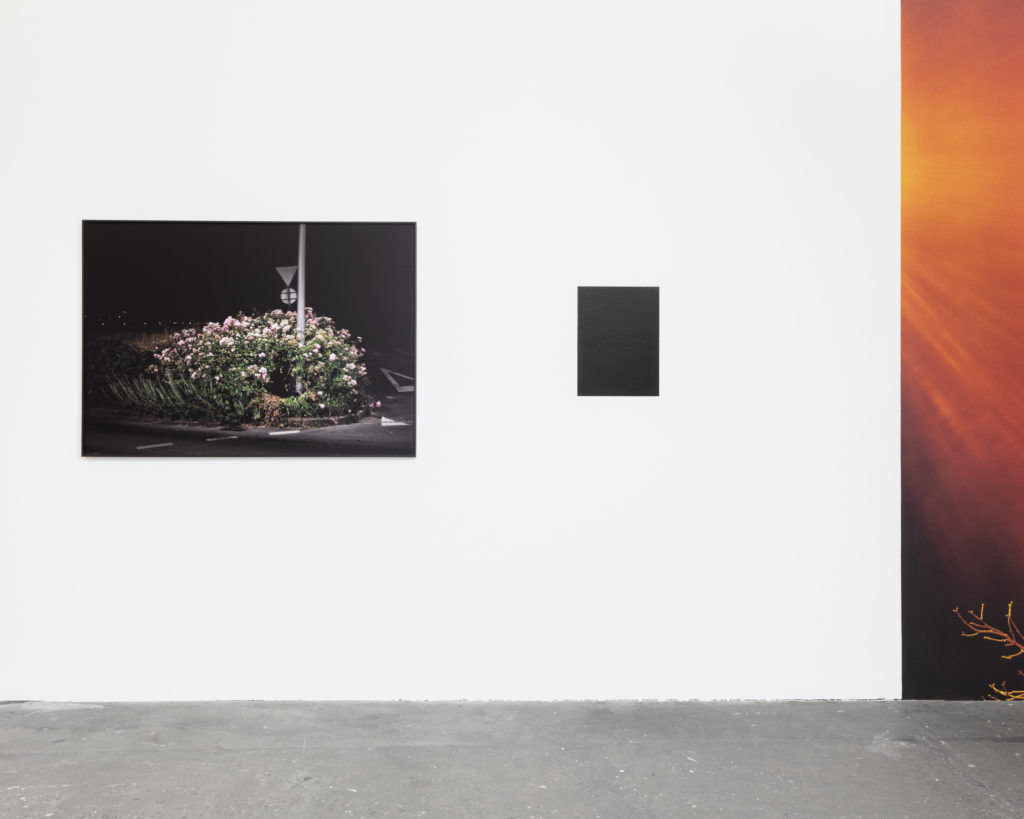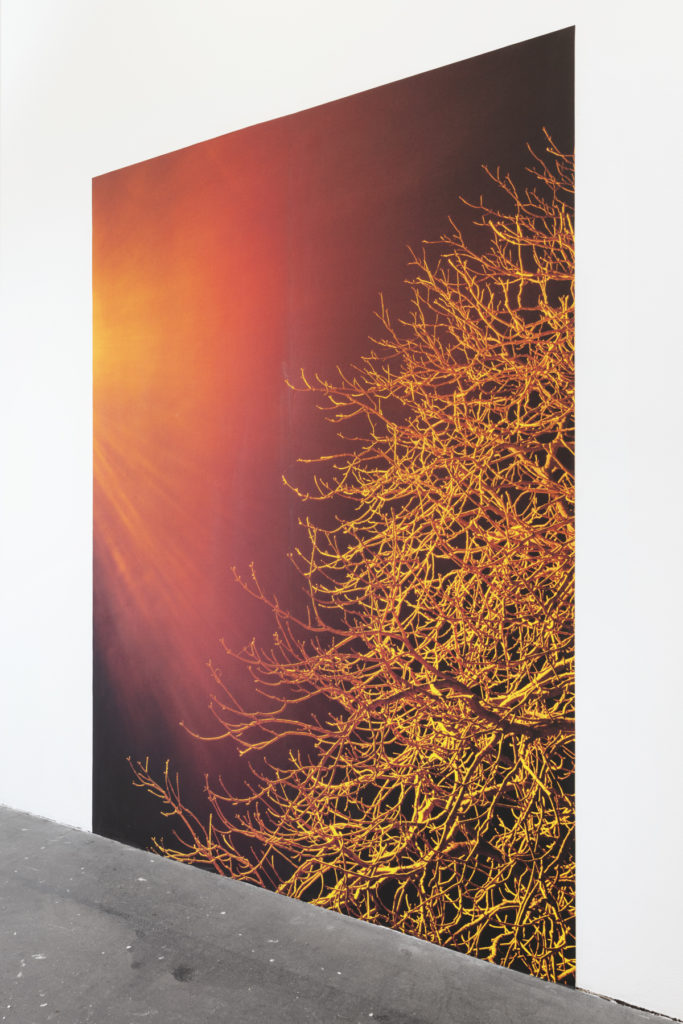
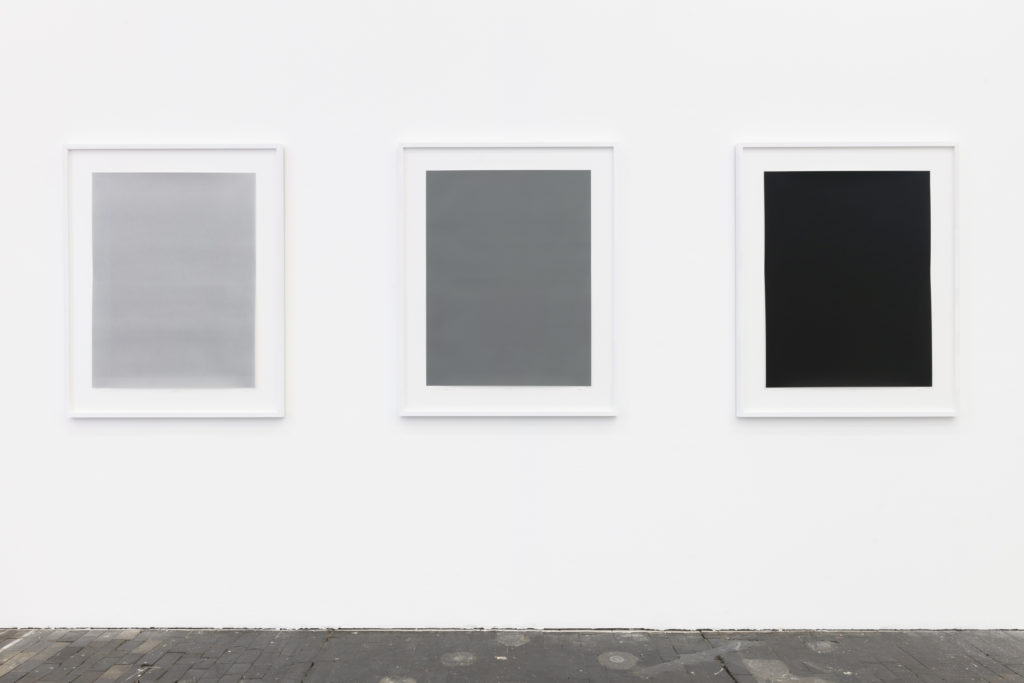
The exhibition Relever la nuit [Surveying the Night] examines the light that forms the basis of photography, and the impact of our contemporary lifestyles on ecosystems. On moonless nights, the artist exposes photosensitive paper for the same duration of time, taking readings of light pollution. The results are monochromatic images, whose different shades of grey resulting from the emanations of artificial light on the outskirts of towns and villages. In Switzerland, it is no longer possible to observe the natural darkness of the night. The artist’s work echoes a study carried out in 2019 by the University of Geneva on light pollution in the Geneva basin, based on aerial photographs taken at night, which led to a map of the region’s nocturnal ecological network. In this project, the artist combines the role of photography as an aid to science with the notion of proof and imprint usually associated with photography. She records the disappearance of night, noting that darkness no longer exists, masked by endless light, and that it is through the brightness of the image that night is revealed, a paradox of the inversion inherent in the photographic process.
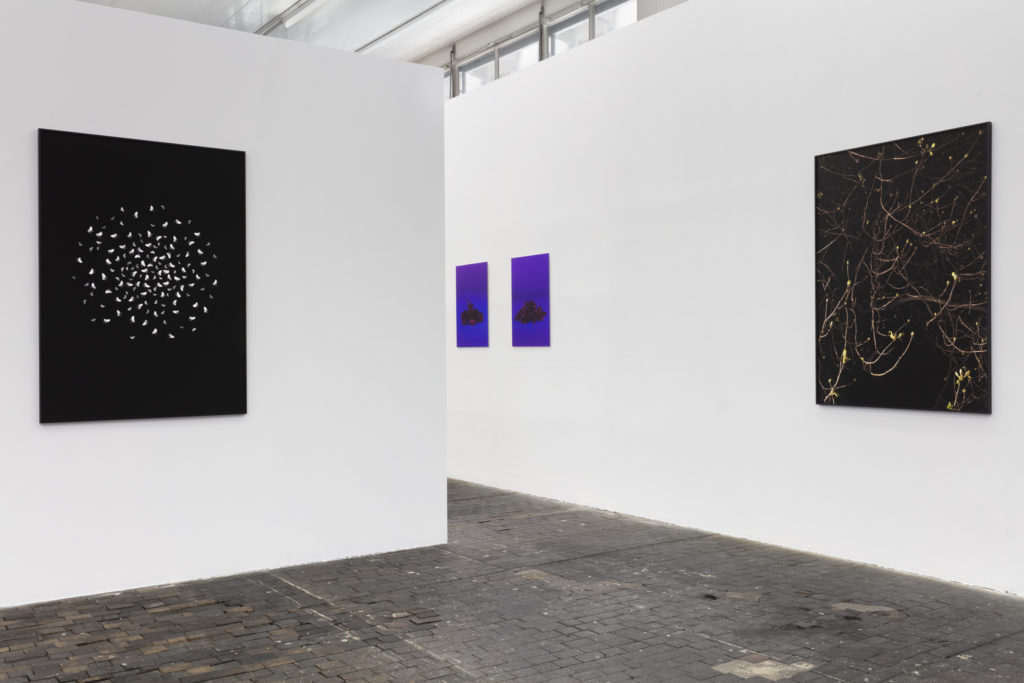
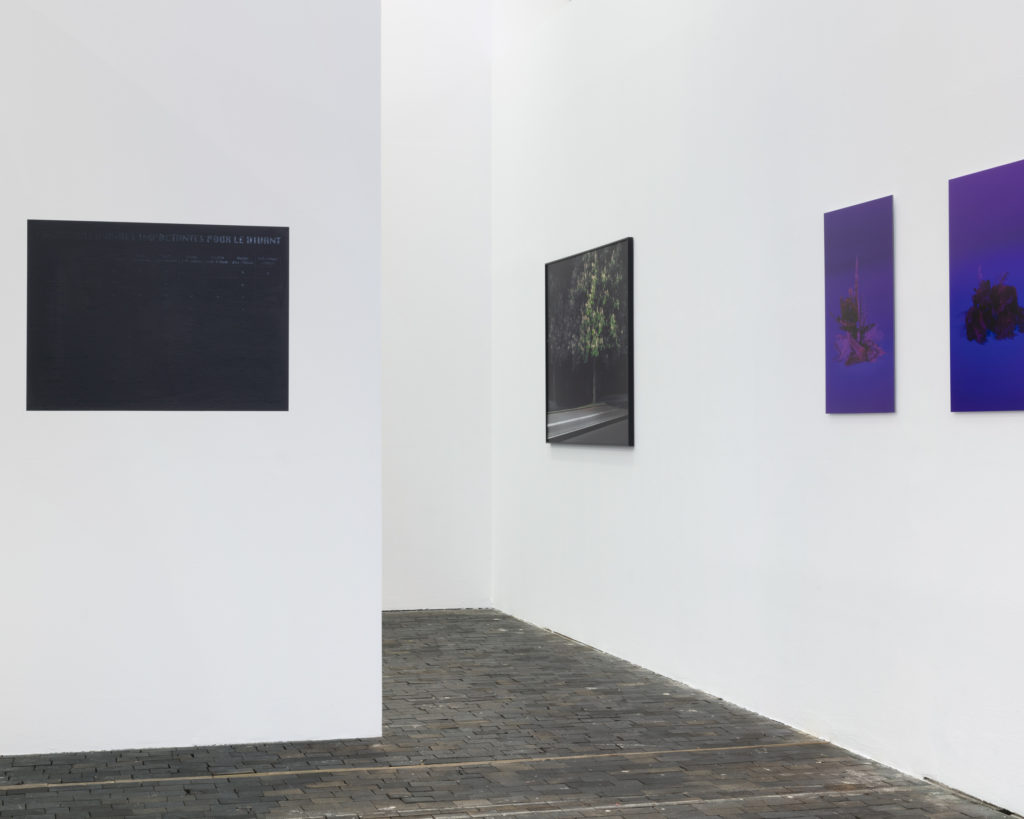
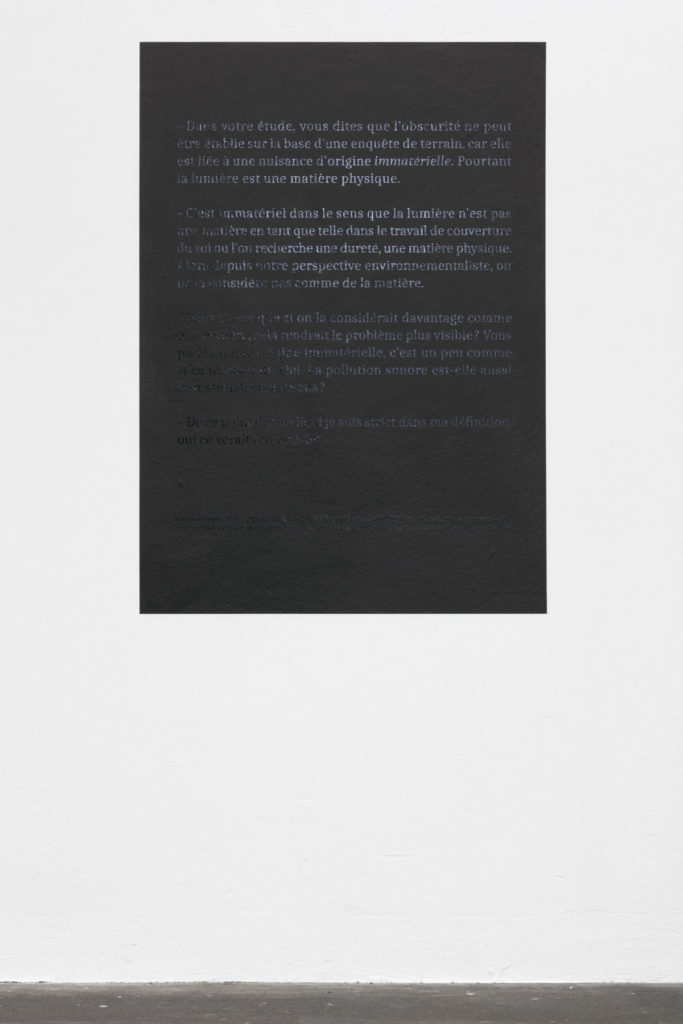
The exhibition brings together several types of images, exploring both documentary and experimental strategies. Using photograms, the artist records the conditions of artificial light in Geneva. With these images, taken without a camera and with long exposure times (identical for every location), she takes an experimental inventory of light pollution by creating snapshots of a given moment. At the same time, this work questions the scientific uses of photographic images, as well as the inherent paradox of the project: the more light there is in the sky, the darker the image. The light reveals the darkness. Black-on-black texts and diagrams punctuate the exhibition, reflecting the artist’s research and the paradox at the heart of the project.
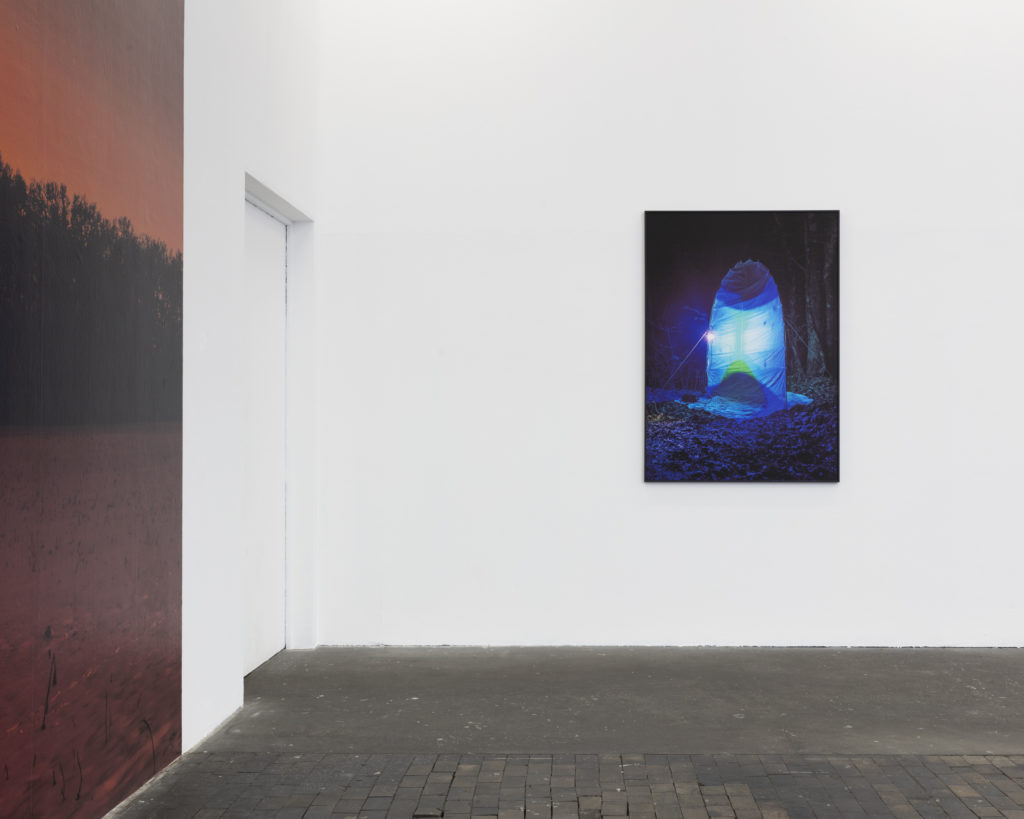
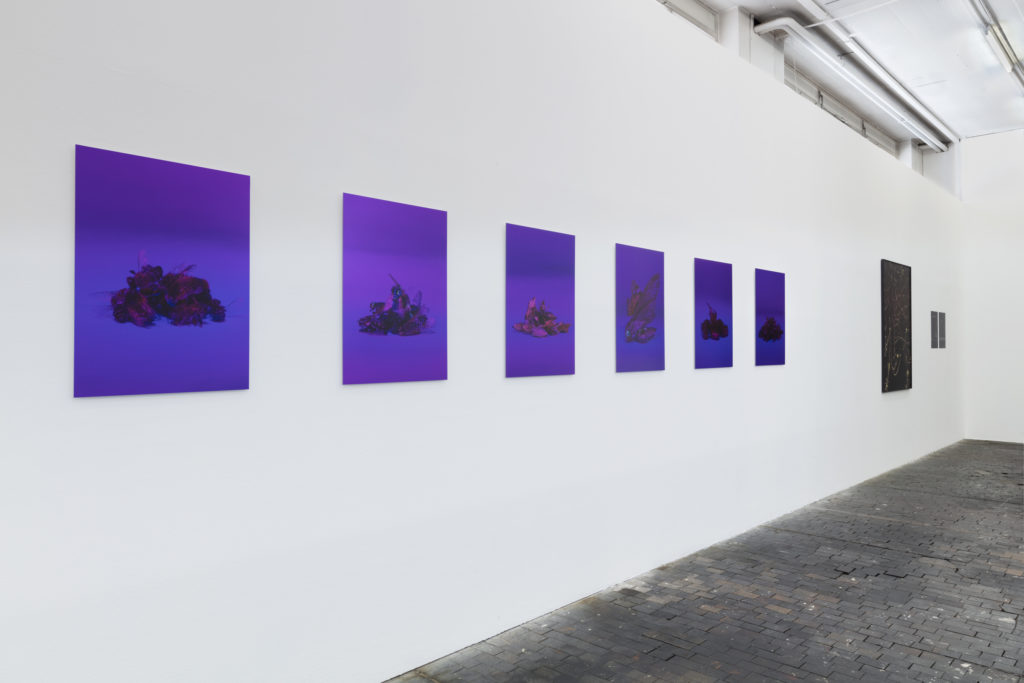
In her images of insects, the artist evokes the mortality linked to artificial lighting. A study carried out in Germany estimates that 150 insects are killed per streetlight every night in summer. To take these photographs, she uses lighting containing short wavelengths (blue and UV), which have the greatest im- pact on biodiversity. The artist also documents the differences in colour temperature of artificial lighting (measured in degrees Kelvin). The colour temperatures of LED lighting do not necessarily correspond to the wavelengths (nanometres) of the bulbs. As with insects, which are disorientated by artificial light sources, certain wavelengths can alter the growth of plants.
With this work, which was awarded the 2022 Grant for a documentary photographic project by the City of Geneva, Léonie Rose Marion reveals the multiple consequences of our lifestyles on the environment, while questioning the characteristics of the photo- graphic medium.