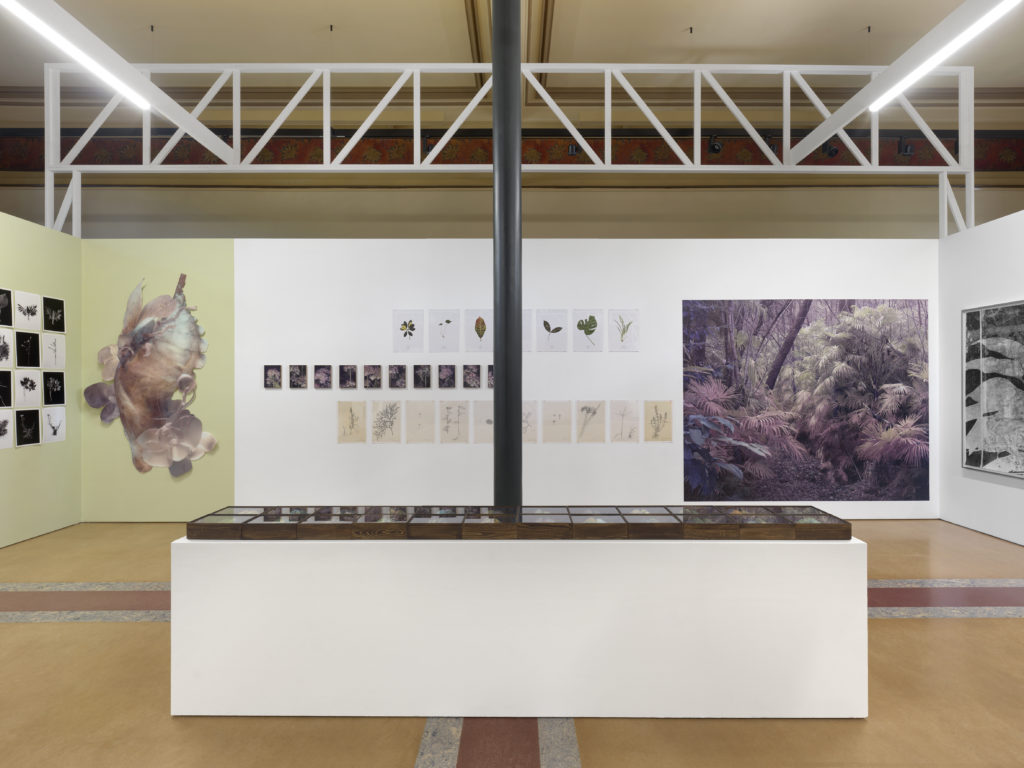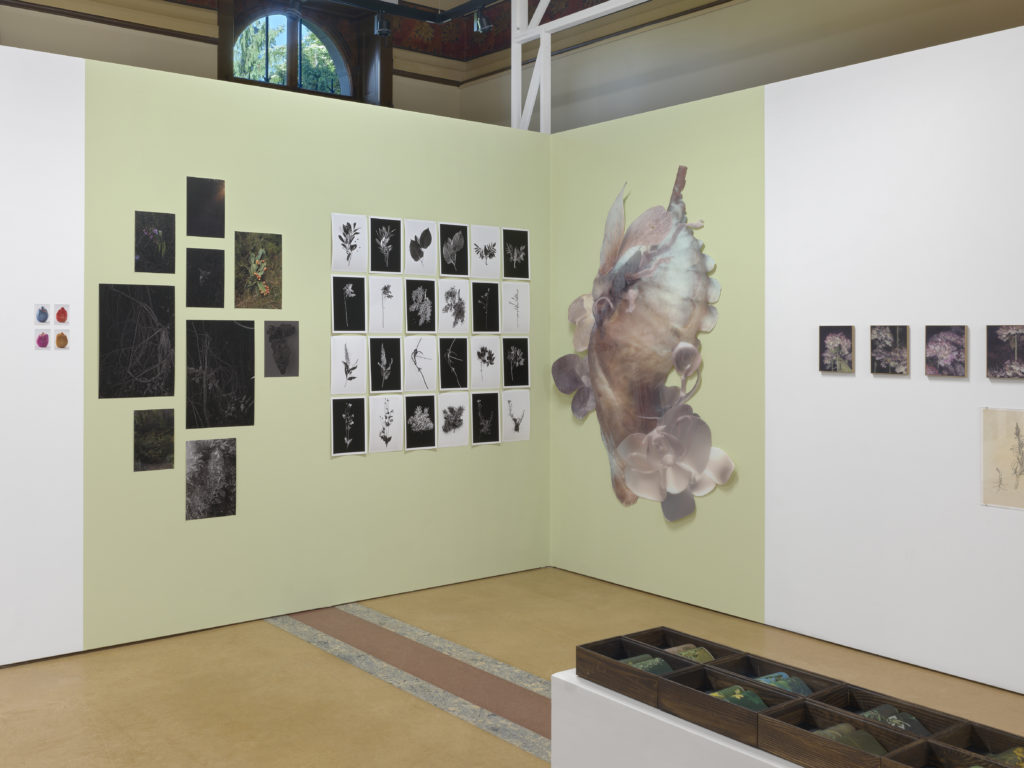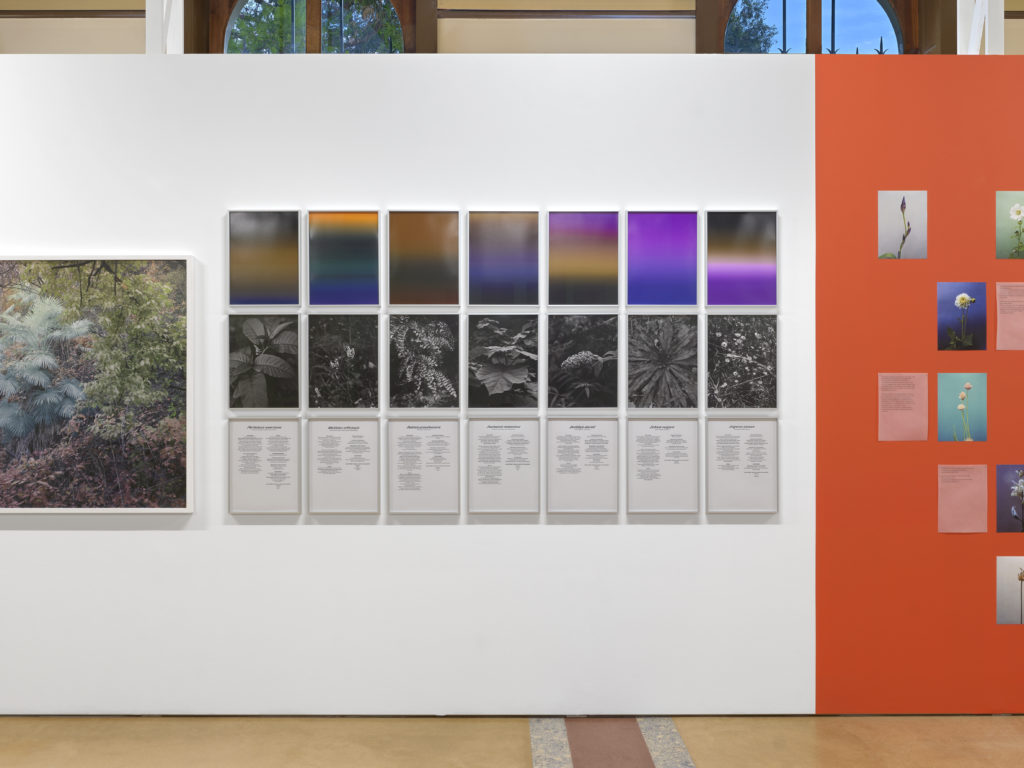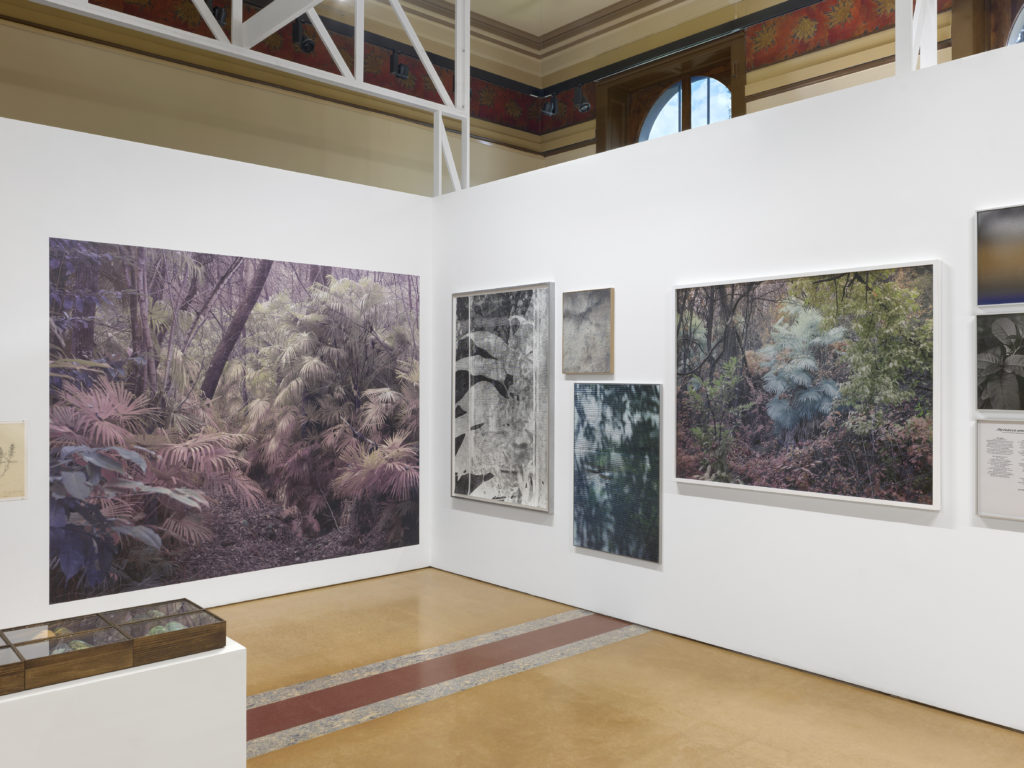



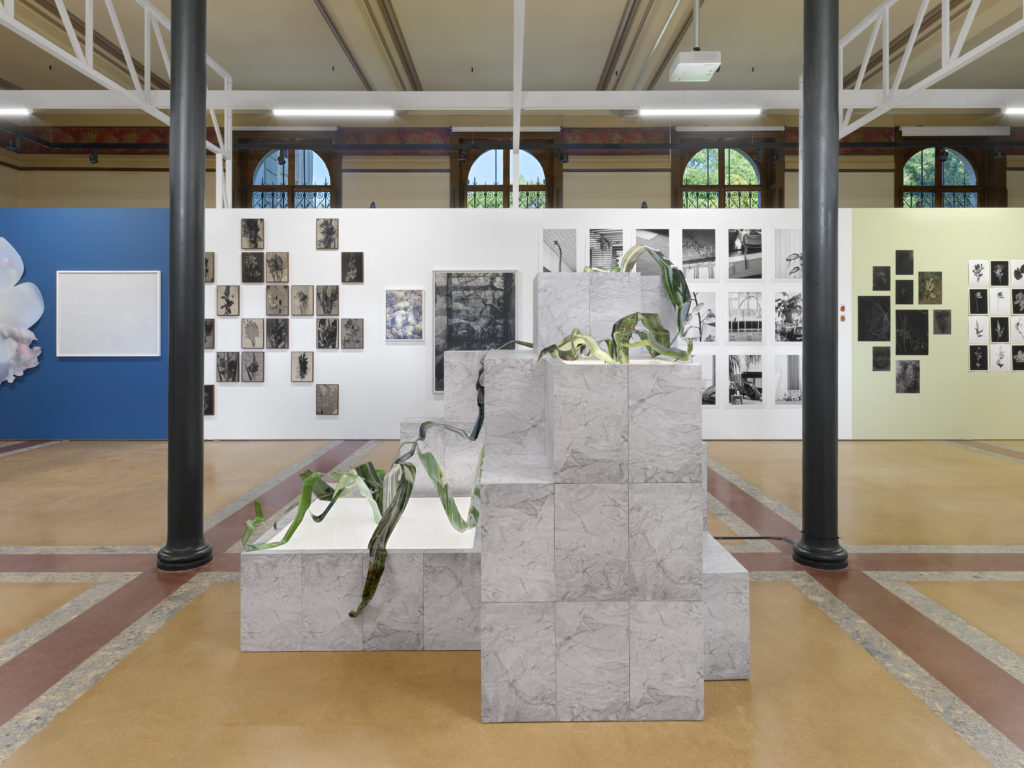
With Saskia Groneberg, Yann Gross, Yann Haeberlin, Felicity Hammond, Hilla Kurki, Yann Mingard, Lea Sblandano, Berit Schneiderheit, Bernard Tullen, Magdalena Wysocka & Claudio Pogo, and Les Conservatoire et Jardin botaniques de Genève.
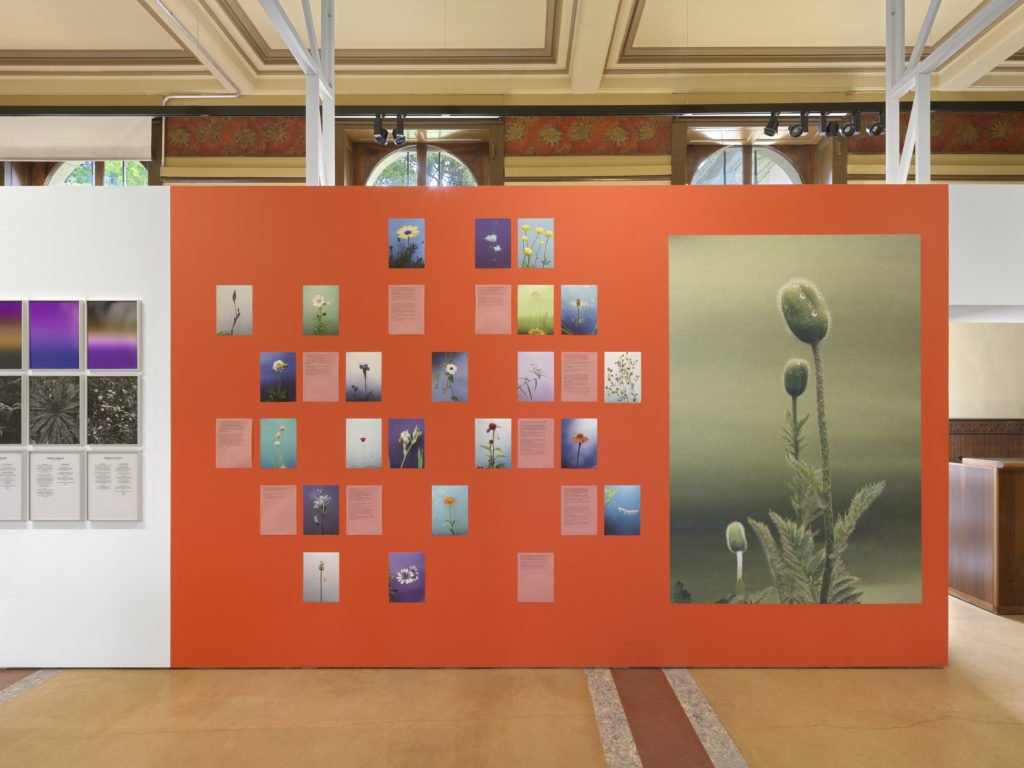
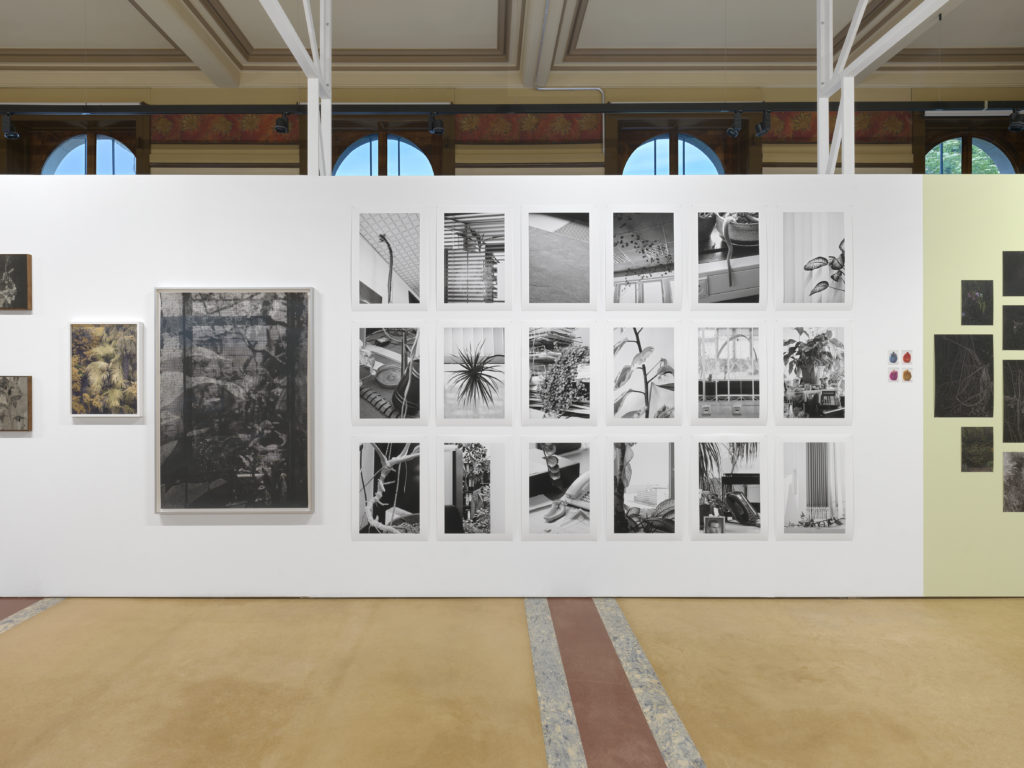
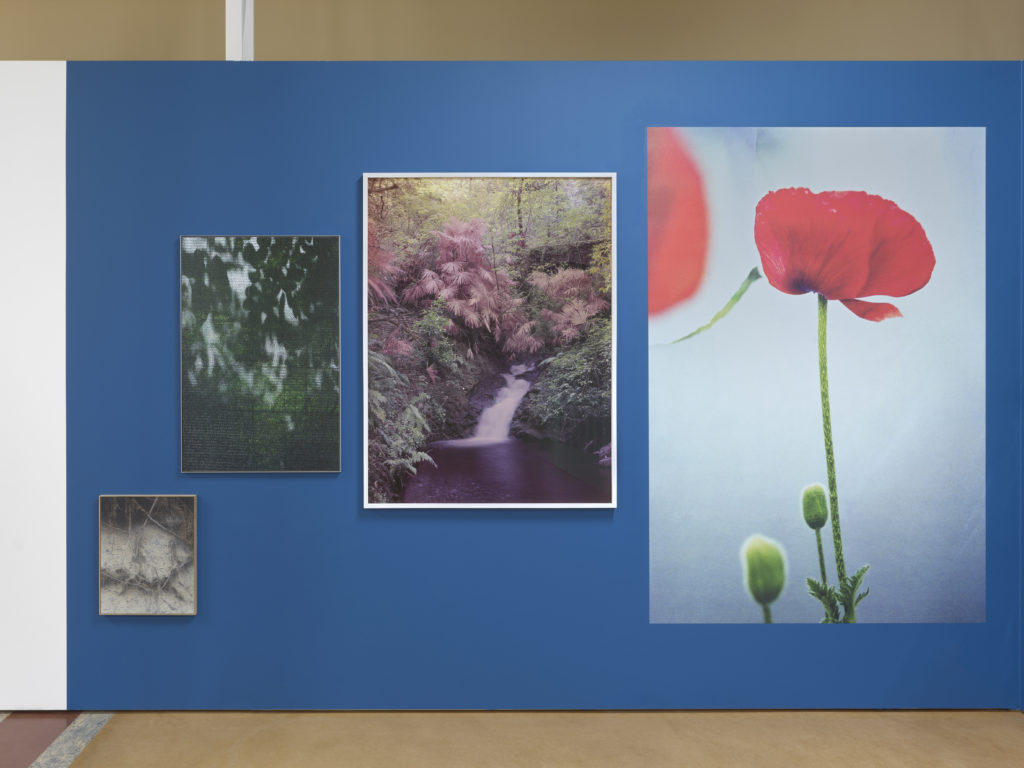
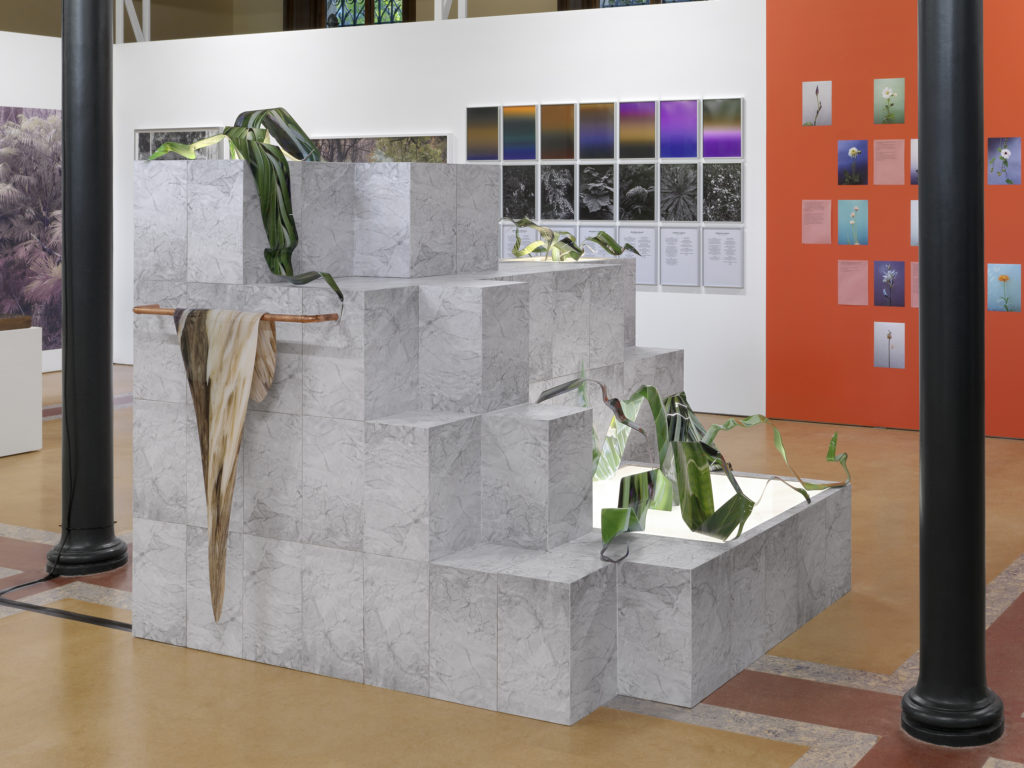
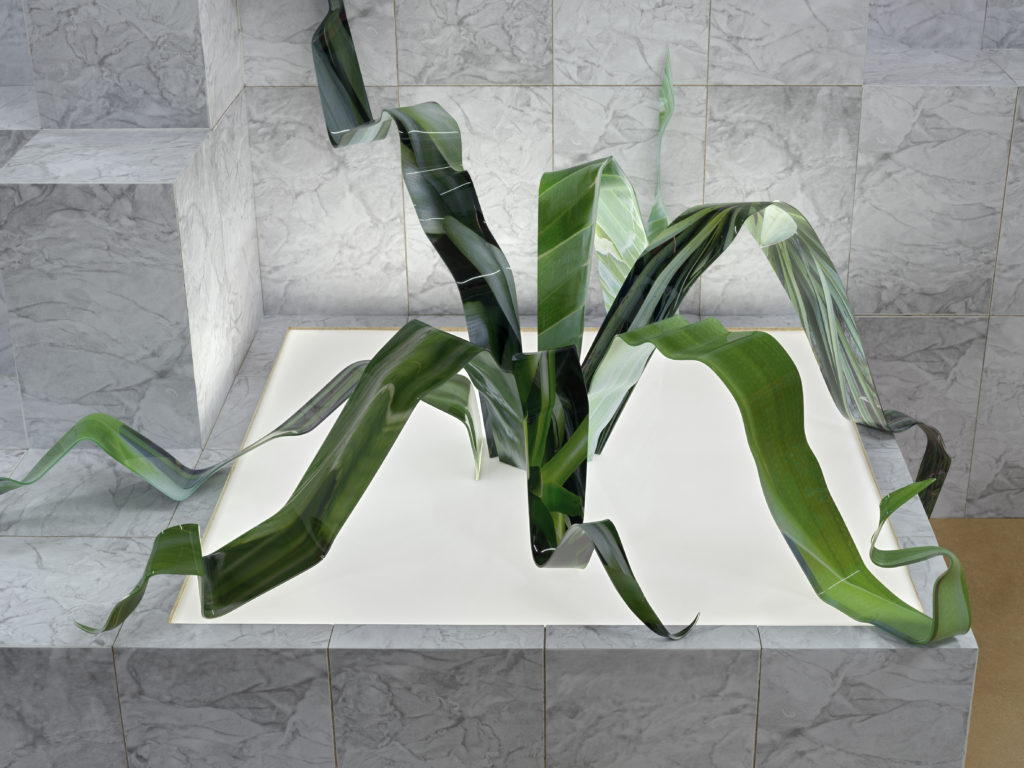
The exhibition Botanical Murmurs explores our often paradoxical relationships with the plant world, and the ways in which plants become in turn objects of affection thanks to their aesthetic qualities, signals and symbols of environmental upheaval, the embodiment of sustainable consumption, or perform aesthetic or symbolic functions. For example, while the Monstera deliciosa, whose presence in Europe is a direct consequence of colonial expansion, is seen in the West for its decorative qualities, in just a few years, palm trees in Ticino have become the symbol of biological invasion and global warming. While many plants are disregarded because they are deemed insignificant, harmful or unphotogenic, others are invading shops, homes, social networks and, more broadly, our visual culture.
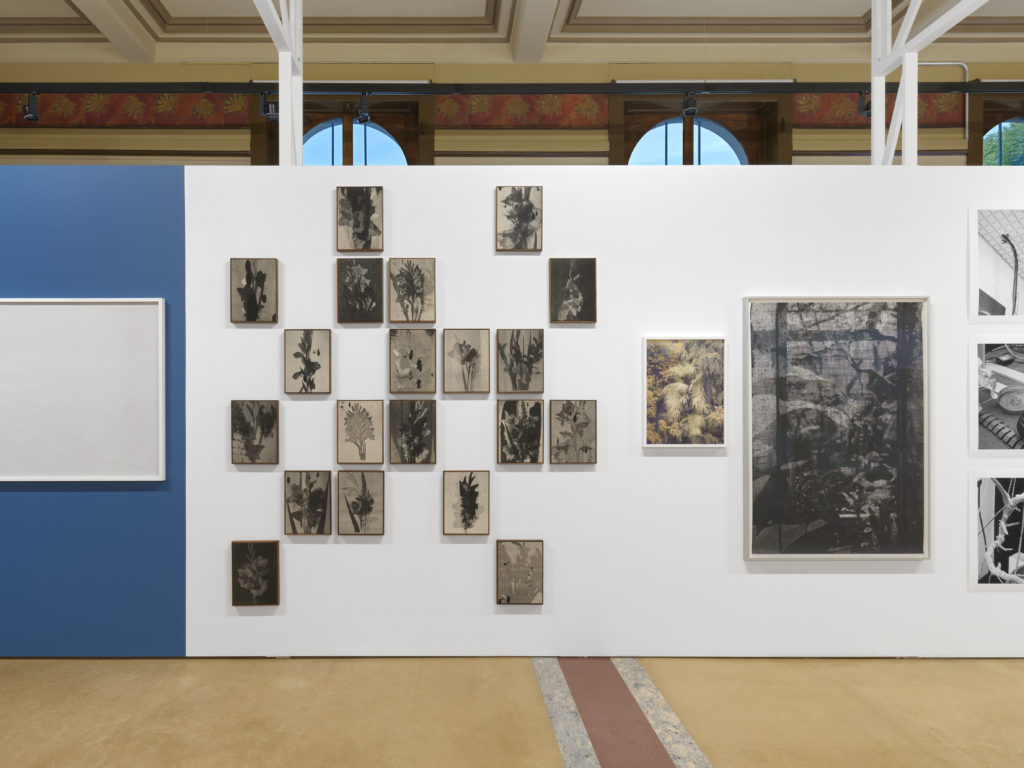
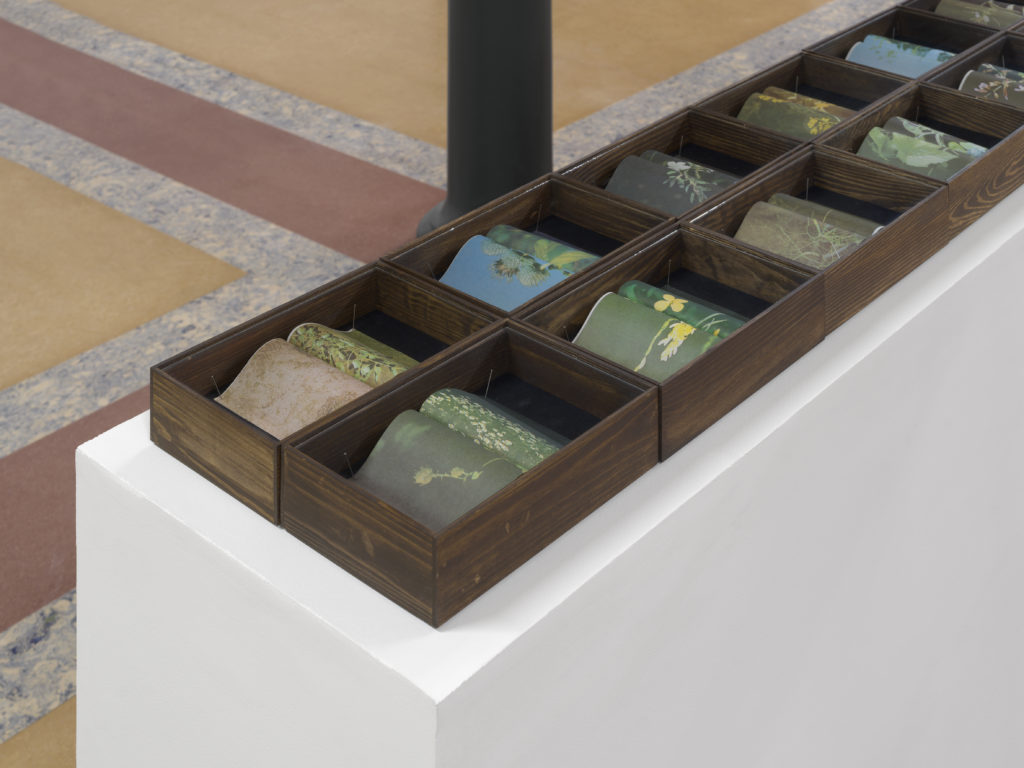
Bringing together intimate narratives, scientific documentation, speculative explorations, and everyday observation, this exhibition presents a multitude of contemporary botanical studies. It aims to capture some of the complex meanings of plants in today’s cultural context. The notions of study and of typology permeate the entire history of photography, particularly when it is used in the service of science or for documentary purposes. From the cyanotypes of algae made by the English botanist Anna Atkins to the enlargements of plant details by the German artist Karl Blossfeldt and the contemporary botanical illustrations by the British photographer Niki Simpson, plant studies and typologies abound. Since the 1840s, photographers have made major contributions to the development of botanical knowledge, and to our visual culture of the plant world.
This inaugural exhibition of the Centre de la photographie Genève’s new exhibition space echoes the Art Nouveau floral friezes of the Espace Ami-Lullin, an exhibition room inaugurated in 1905, as well as its location in the heart of the Parc des Bastions. In 1817, this park became Geneva’s first botanical garden, on the initiative of the Genevan botanist Augustin Pyramus de Candolle. He was the author of one of the first botanical classifications, and undertook a vast project that led to the description of nearly 60,000 plants. Finally, this exhibition is intended to resonate with the new setting of the Centre de la photographie Genève: the Bibliothèque de Genève, a venue dedicated to the study and conservation of knowledge about the world.
With loans from Conservatoire et Jardin botanique de Genève, Art Vontobel Collection and Wilde Gallery.